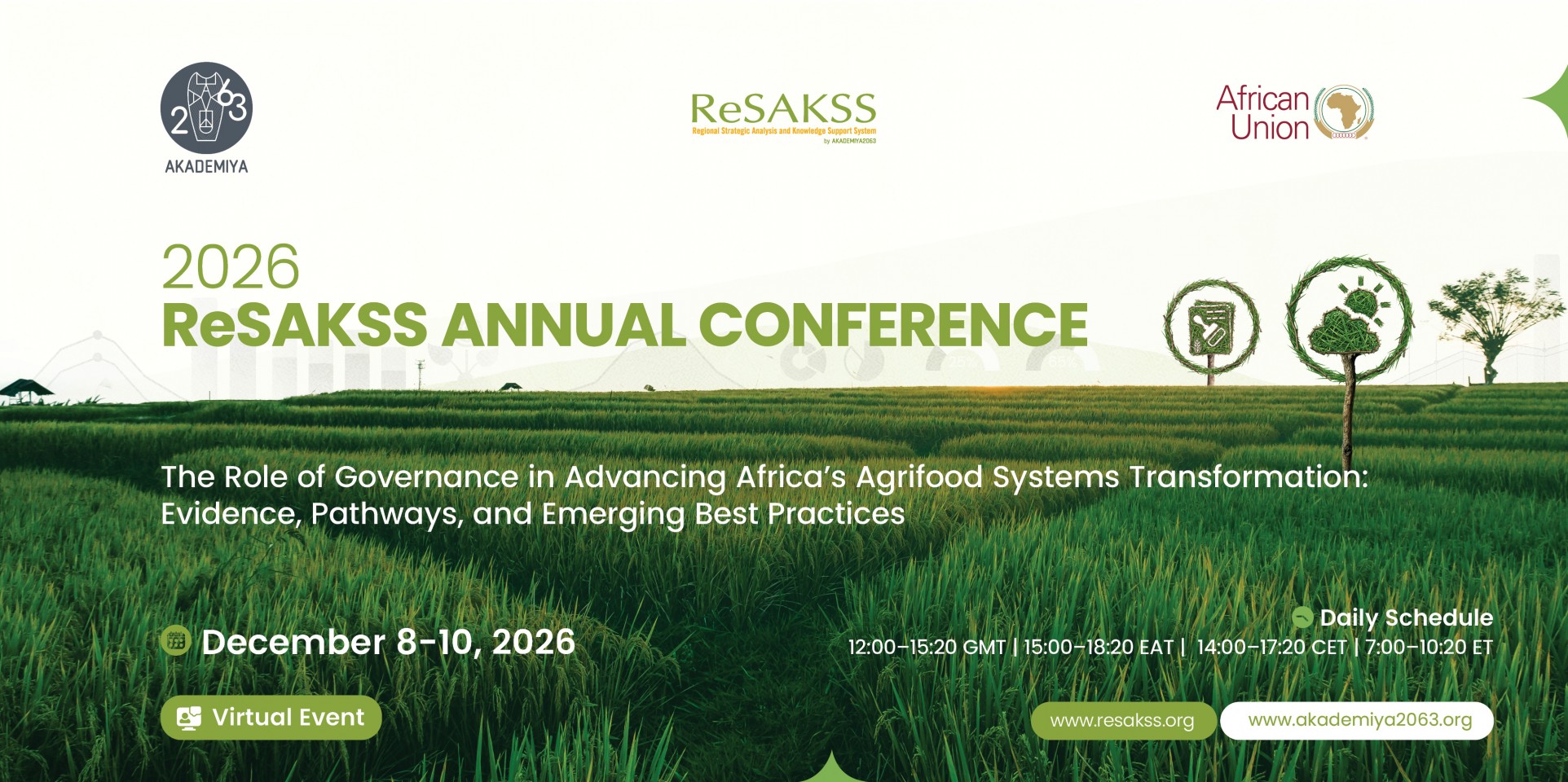
The Role of Governance in Advancing Africa’s Agrifood Systems Transformation
At the outset of Kampala CAADP implementation, there is a pressing need for synthesized evidence on governance concepts, design principles, and best practices to guide the translation of political commitments into implementable actions at national, regional, and continental levels. Responding to this need, the 18th edition of the Annual Trends and Outlook Report (ATOR) generates and synthesizes evidence on how economic, environmental, and political governance systems can be intentionally designed and implemented to advance the sustainable transformation of Africa’s agrifood systems.
AKADEMIYA2063, in collaboration with the African Union Commission, is convening the 2026 ReSAKSS Conference to launch the 18th ATOR. This year's event will take place online on December 8-10 under the theme "The Role of Governance in Advancing Africa’s Agrifood Systems Transformation." The conference will formally launch the 2026 ATOR. Key findings and recommendations, along with policy messages, will be presented based on the findings of the ATOR chapters.
The three-day virtual event is designed to foster policy dialogue. Day 1 sets the stage with framing remarks, an overview of the 2026 ATOR, a high-level panel on why governance matters, and a first roundtable on the report’s conceptual foundations. Day 2 focuses on the governance of natural resources, markets, and innovation. Day 3 shifts from evidence to action, covering country experiences and CAADP implementation, followed by a high-level closing panel.
Conference Goals and Objectives:
- Share the findings of the 2026 ATOR and examine the conceptual and practical links between governance and agrifood systems transformation.
- Discuss different governance models and institutional arrangements that support inclusive, resilient, and sustainable agrifood systems, drawing on evidence and best practices from African countries and beyond.
- Strengthen dialogue and coordination among continental, regional, national, and non-state actors around Kampala CAADP implementation.
- Assess the status of CAADP implementation and progress toward achieving key goals and targets
Who Should Attend:
- Continental and regional institutions: The African Union Commission (AUC), African Union Development Agency – New Partnership for Africa’s Development (AUDA-NEPAD), and Regional Economic Communities (RECs).
- National government and policy institutions: Ministries responsible for agriculture, trade, finance, environment, and planning; parliamentary committees; and joint sector review platforms.
- Research and knowledge institutions: Research institutions, think tanks, and universities.
- Development and financing partners: Development partners, international organizations, and financing institutions.
- Private sector and non-state actors: Private sector representatives, farmer and producer organizations, and civil society organizations, including women’s and youth organizations.